I was originally writing a post about our new home gym setup, but what I ended up with instead is this self-reflective piece on what it takes to earn your stripes in the mountains.
I’ve been casually climbing for about 10 years now. Fitting for a (now reformed) tech bro, I started with bouldering. Then I got introduced to top-roping and, as it goes, I pivoted to lead climbing shortly after. I eventually did some sport multi-pitch routes outside, but the dream always was to be able to send some long alpine trad routes.
Fast forward a few years to 2025 and we’re moving to Trento. Finally. The mountains will be at our fingertips.
At the time, climbing-wise, I was pretty strong. Or at least I thought I was. I was comfortable with 11s in the gym and sometimes I would even get my hands on a 12a. So naturally I thought I’d just hop on whatever cool alpine route caught my eye and I’d fly up it with no issues.
The mountains, however, put me in my place real fast.
Aged Like a Fine 6a
It’s August, we’re all settled in (within reason), and the nearest crag is about a 15-minute drive from where we live. Let’s finally touch some rock.
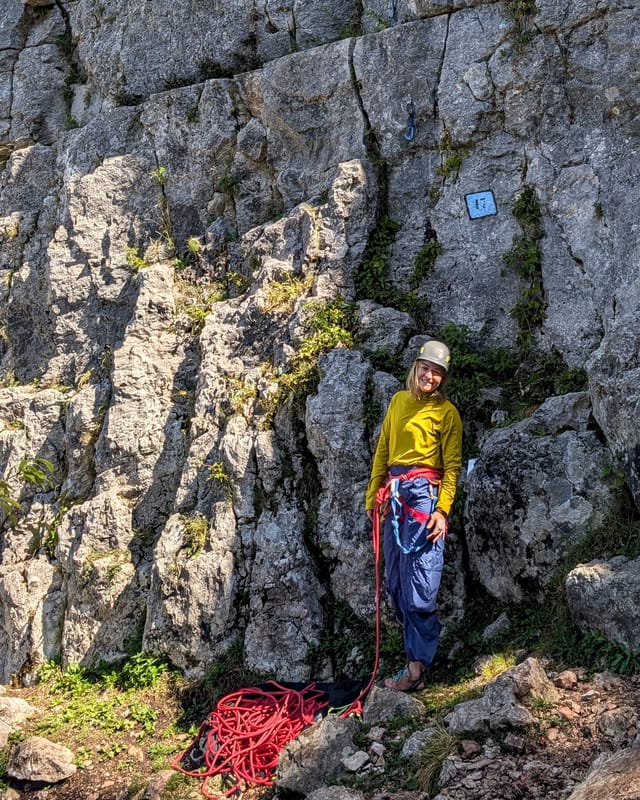
After some mental juggling to convert the grades, we agree that we should warm up on 5cs and then comfortably send some 6a-6b routes. Red flag number one: there’s about one 5c at the whole crag and, as per usual, it is sketchy. Sketchy as in, if you fall, you bounce from one pointy feature to another like a little pinball. But hey, at least it’s bolted generously… NOT. Because why waste gear on a measly 5c?
It does get our heart rate up, so I guess you could say it was a decent warm-up after all.
Now it’s time to step up our game and move on to the 6as. We consult the guidebook and find the perfect candidate. A route called “Semplicotta”, which means pretty much what it sounds like and the description simply reads: “Perfect for warm-up”. Alright, we’re already warmed up, so how bad can it be?
It’s routes like these that really make you appreciate the passage of time. Established long before we were born and sculpted year after year by hundreds of hands, these routes slowly turn from rough, pointy rock into smooth, polished masterpieces.
Although I prefer my smooth marble in the fancy halls of Florence, I start climbing. After a few shaky moves, I arrive at the spot where the promised generous jug is no more. And it becomes painfully clear that this is where my journey ends today. I say goodbye to my bail-biner and, you guessed it, bail.
On the walk of shame back to the car, I contemplate petitioning the local climbing community to rename the route to “Not so Semplicotta”.
Not All Gyms Are Created Equal
After the crag debacle, we decide to switch things up and, on a rainy day, roll into the local climbing gym. It’s nice and big, mostly lead, and the walls are a good 20 meters tall. There’s no red tape or waivers. You look like you know how to climb, you climb. Also, no mats on the ground. Focusing on what matters. We like it.
We don’t play heroes and we pick a tame 5b for warm-up. This time we don’t have to bail but still, it feels stiffer than we’d expect. We try a couple of 6as after that and yep, can confirm, just like at the crag, they’re pretty hard.
What is not like at the crag, though, is the grade distribution. There is actually a decent number of routes in the 5s and we conclude that maybe we just picked a hard crag. And maybe the average climber here isn’t sending 6s all day every day. And maybe we’re not all that weak.
We’re feeling better, but the upbeat mood does not last long. A wild group of jolly Italian grandpas appears. They hop on a random 6b and, about five seconds later, we hear “Va bene” as they clip the chains.
Maybe we are that weak after all.
It’s More Than Just a Few Pitches
The final reality check comes when we decided to do a real alpine climb on our own. Drawing from our humbling experiences, we agree to start with an easy route. Like really easy. We’re talking a glorified scramble easy.
After a few hours of research, I find a good candidate. 4 pitches of very easy climbing, supposedly well below the grades we can climb, and in an area we are familiar with. Having done my homework, I know we should be fine. Yet unless you’ve actually climbed a route yourself, you never really know what you’ll run into. So I am still feeling a little uneasy.
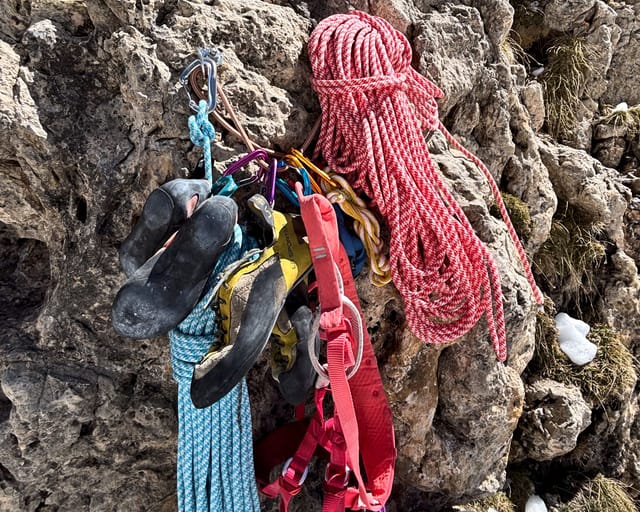
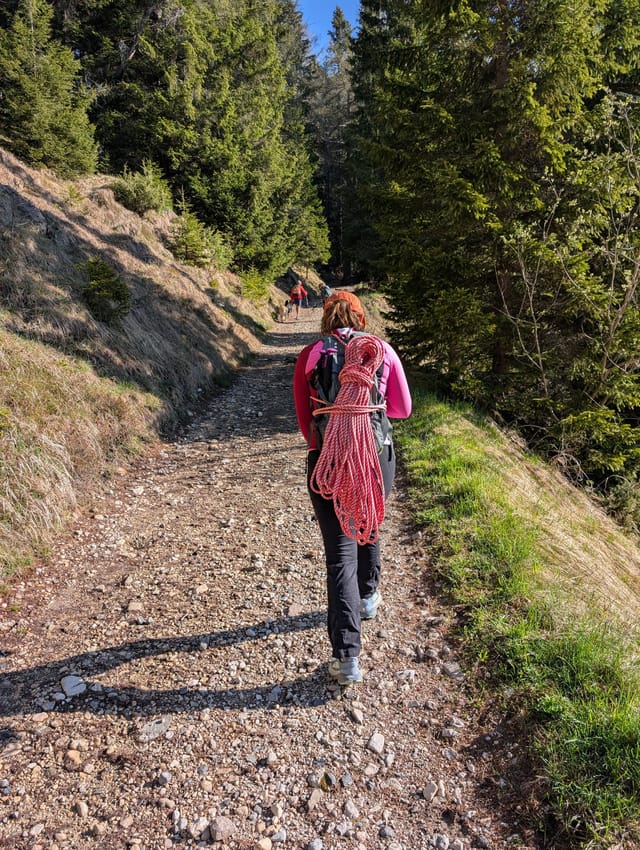
Add to that the early start to avoid the afternoon storms. The 2-hour hike-in, because the good stuff is hardly ever right by the road. All the trad gear you need to prepare and organize because you’re going to need more than just your trusty 8 quickdraws. And, of course, all of that needs to go on your back. It all adds up even before you put your harness on.
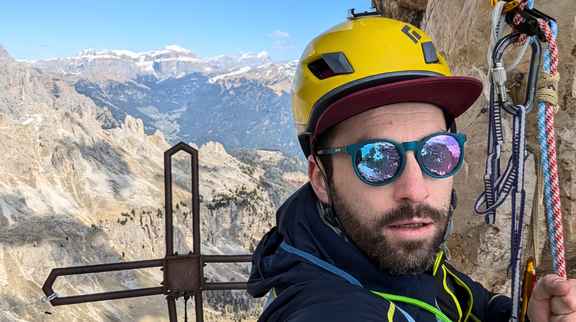
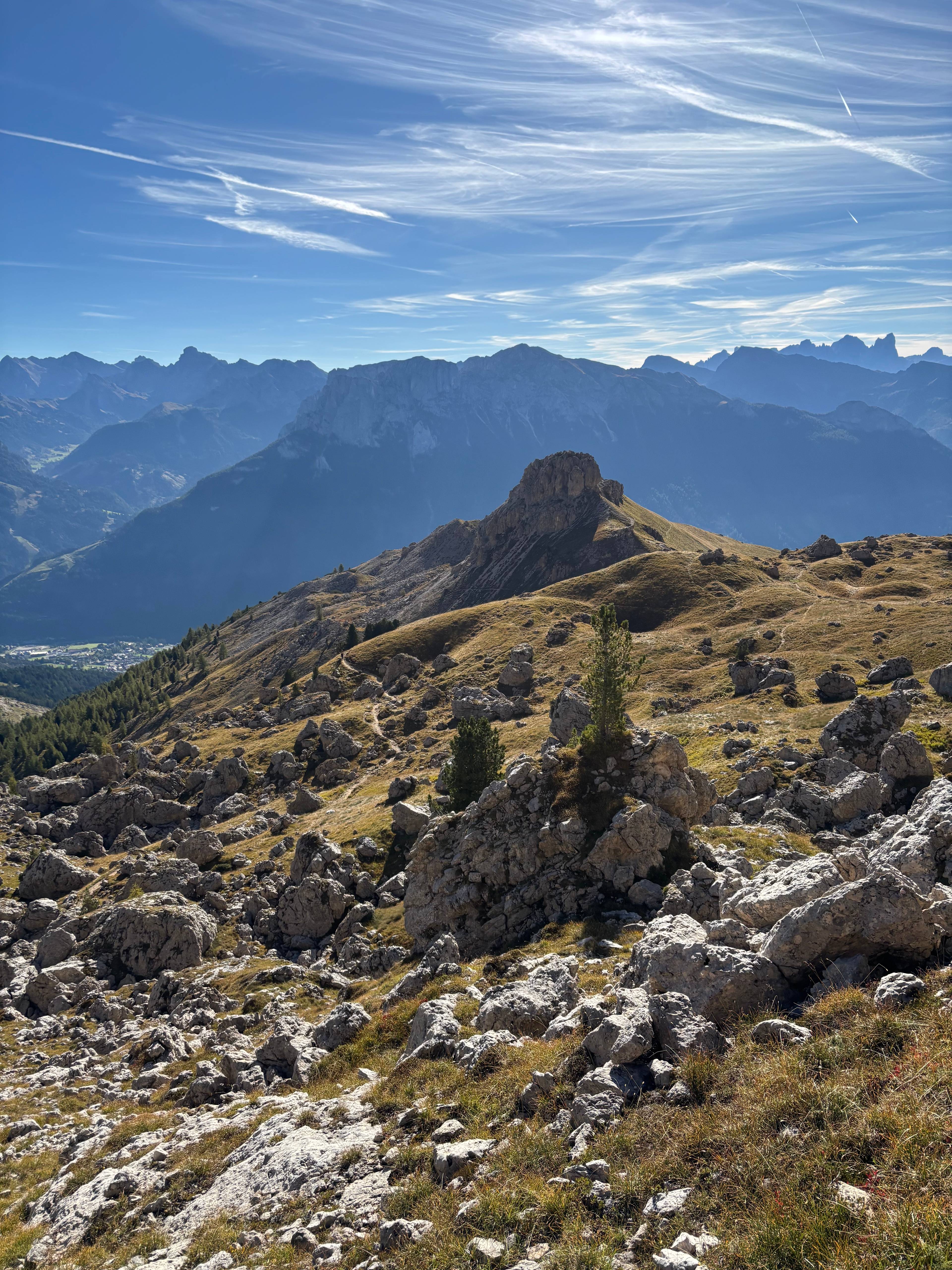
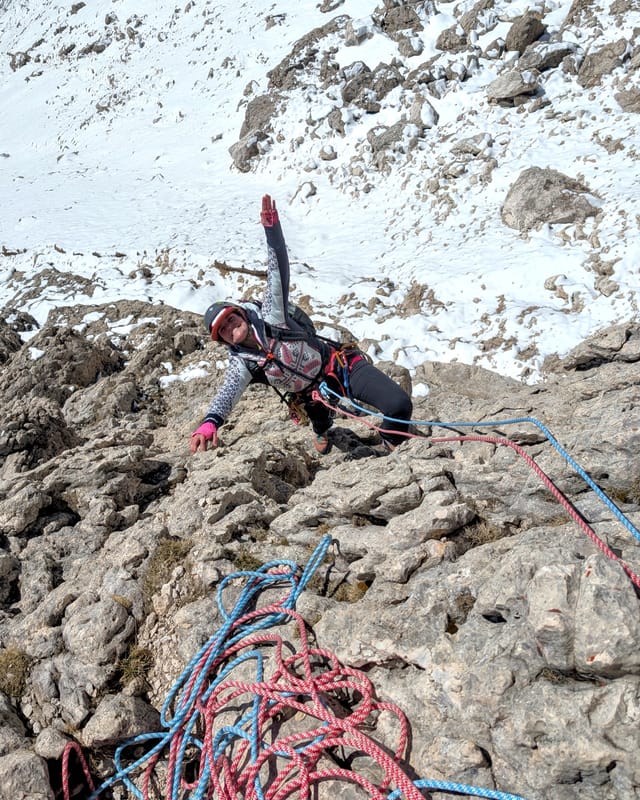
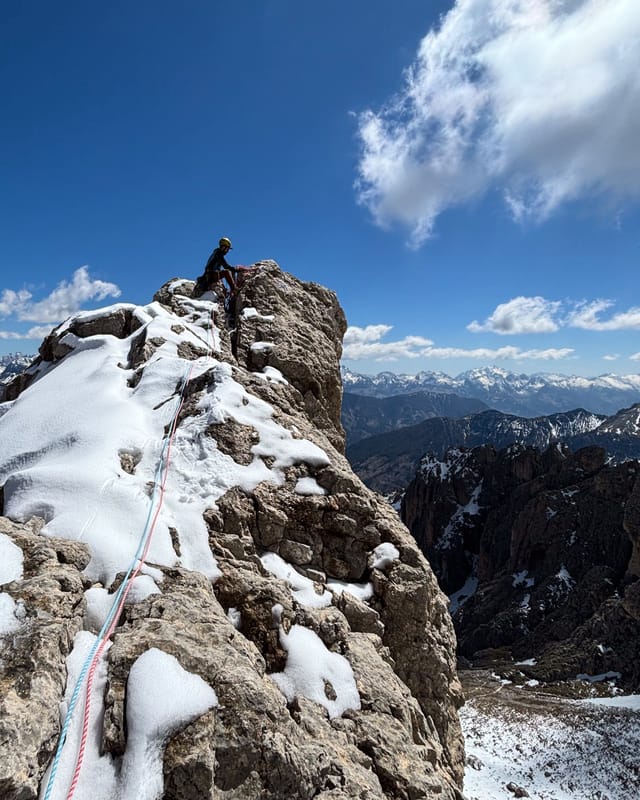
Luckily, this time, the climb we picked really was an easy one. Everything went according to plan, the climbing was fun and safe, and the alpine scenery was everything we’d hoped for. It just was a lot of work.
Despite the climbing itself taking just over an hour, it felt like a really long day. By the time we made it back to the car, I was pretty toast. Physically and mentally.
If you made it all the way here and now you’re wondering whether this is just a rant about how hard climbing is and how weak we are, the answer is yes. But it’s also more than that.
It’s a realization that, at some point, just showing up and climbing casually is not going to cut it. That if you want to have fun in the mountains without taking stupid risks or being worried all the time, you might actually need to put in some old-fashioned work and get sweaty. Turns out, you do have to earn your stripes.
As they (and by they I mean me) say: flick through the local guidebook and if 90% of the routes are above your level… less climbing, more training.
And that finally brings us to our home gym setup I was meaning to write about in the first place. That piece is coming up real soon.