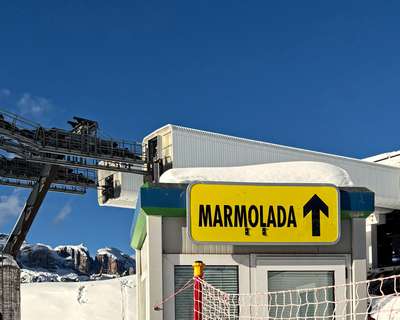
What is Marmolada, and Why Does It Sound Like Jam?
Most people know Marmolada as the highest mountain in the Dolomites but it’s really the name of the whole massif, like the Sella or Catinaccio. The actual high point is Punta Penia (3,343 m), reachable by via ferrata but not skiable, at least not for normies like us.
What you can ski is the next one down, Punta Rocca (3,309 m): the cable car tops out just below it and the runs start there. The Marmolada group sits on the Trentino–Veneto border, with the peak on the Veneto side. Sorry, Trentino.
On the north slope you have the only real glacier left in the Dolomites. Sad. And on the south side you’ll find one of the biggest vertical limestone walls in the range, famous for hard climbing. So that’s Marmolada: a serious mountain group, and nothing to do with jam.
Marmolada
- Lifts
- 5
- Slopes
- 3
- km of slopes
- 15 km
- Elevation
- 1,446 m - 3,269 m
- Nearest Town
- Malga Ciapela
- Website
- Visit Website
- Skipass
- Dolomiti Superski
- Days of Fun
- 1
- Best Parking
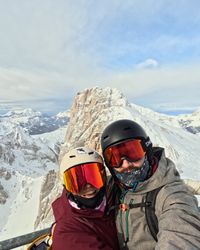
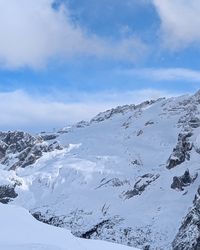
Skiing Marmolada
Driving to Marmolada
If you’re driving, as we did, Marmolada can be reached from either direction of the SP641 road.
From Val di Fassa, you simply drive through Canazei, Alba, and climb up to Passo Fedaia. The is right as you cross the Trentino-Veneto border at the end of the Fedaia Lake. Driving up the pass is nothing crazy and the scenery is beautiful—just make sure it’s actually open in case it snowed very recently.
Alternatively you can drive down the pass on the other side towards Malga Ciapela and park by the that goes parallel with the ski school lift.
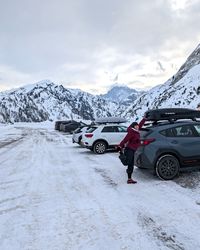
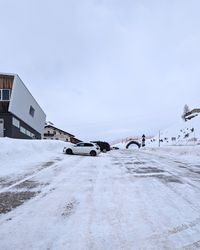

If you’re coming from the other direction—from the east, follow SP641 to Malga Ciapela and park by the ski school lift. There’s no need to climb the pass unless the parking is completely full or you have a brand new sports car and just want to enjoy the road.
Our recommended free parking options for Marmolada.
Skiing to Marmolada
Marmolada is connected to the rest of the ski areas on the Sella Ronda circuit via Arabba. That makes it a perfect candidate for a day trip objective regardless of which area you are based in.
That is, if the weather cooperates. If the weather is bad, or if the avalanche danger is high, the connecting chairlifts from Arabba won’t be running. Especially the old-school Sass de la Vegla chair from Arabba’s middle station.
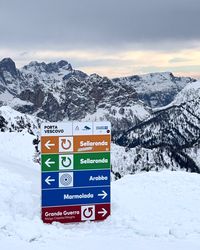
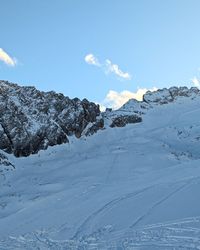
If you’re planning a trip to Marmolada and the weather’s questionable, check the lift status in advance. They usually advertise the connection status at the Arabba base.
It took us about 30 minutes (2 lifts) to get from the bottom of Marmolada to Arabba. And about 40 minutes (3 lifts) to get from the bottom of Arabba to the Marmolada area.
The Logistics of Skiing Marmolada
Cable Car Stations and What to Expect
You start in Malga Ciapela at the bottom station of the first cable car. That one has the biggest wow factor: it takes you over the meadows and trees at the bottom of the valley first, then soars up an almost 400 m tall, basically vertical rock face.
Except for the views, the first station is pretty low-key—you just transfer to the second cable car. If you stop for pictures on the platform, be mindful of others; when it’s not busy, the second cabin won’t leave until everyone from the first has boarded.
The second station is at Serauta, basically at the east edge of the glacier. Marmolada was one of the more active WW1 battlegrounds; there’s a museum dedicated to the war in the mountains up there.
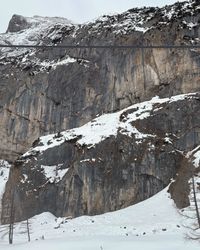
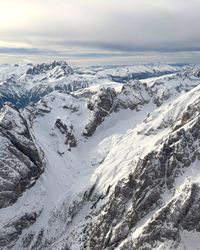
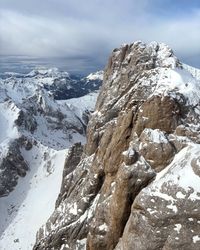
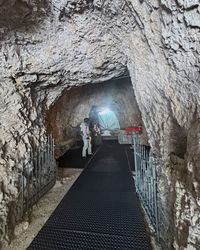
Once you’re done at Serauta, the third cable car takes you over the glacier to 3,200 m, just 100 m below the summit of Punta Rocca.
At the third and final station, Punta Rocca, the main attraction is the panoramic terrace. From there you can see the nearby peaks of Marmolada, Punta Penia, the rest of the group, and how far the Dolomites stretch. The Brenta above Molveno to the west, the peaks around Cortina d’Ampezzo to the east, and the bald, round summit of Kronplatz to the north.
One floor below the station you’ll find the Grotta della Madonna. It’s a small chapel carved into the rock. Most people skip it but it’s worth a few minutes before you head down.
The station and terrace are built into the mountain, so you have to go four (or five from the terrace) floors down to reach the run. You can take the stairs or use the elevator. Just know that the elevator doesn’t stop at intermediate floors, so if you’ve gone down to the chapel you’ll need to climb back up to the station or take the stairs the rest of the way. Don’t waste 10 minutes waiting for an elevator that never comes, like we did.
Skiing the Bellunese from Top to Bottom
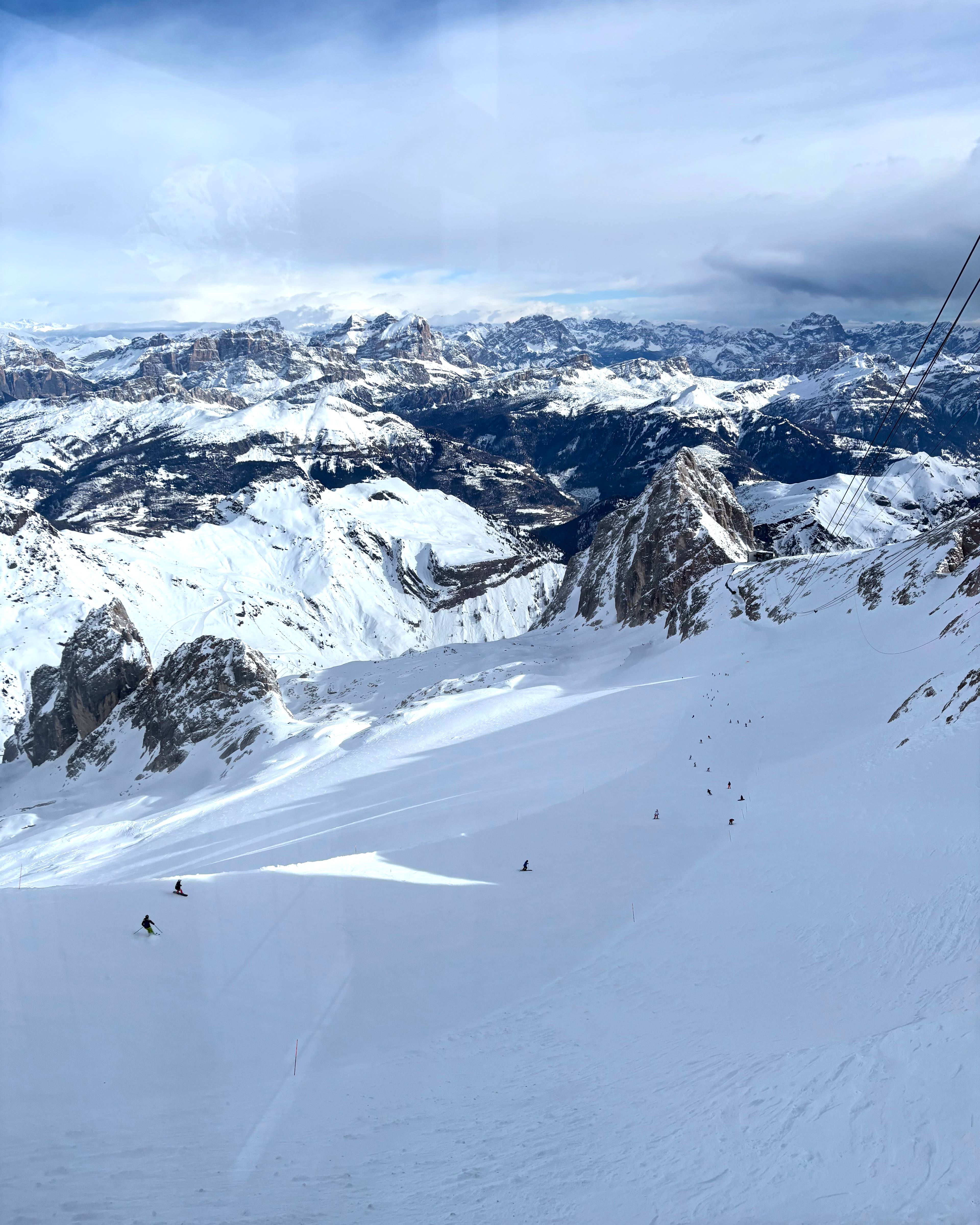
Now the best part. Once you exit the station you’re at the top of the famous Bellunese - a 12 km red run from top to bottom. No need for a lengthy description: just strap in and enjoy the ride.
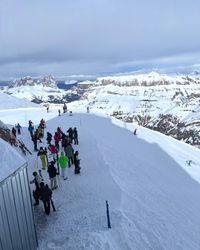
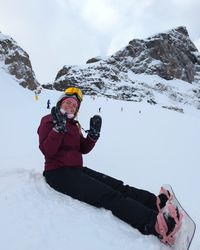
Worth noting though: you’re on an active glacier for most of the upper part of the run. The run itself is maintained and safe, but if you venture off-piste you’re on your own—no guarantees you won’t end up in a crevasse.
There used to be more runs and lifts on the north slope from Passo Fedaia and you can still see the lift pillars. But they’re no longer running, mostly due to lack of snow and low traffic compared to the main run. You can still ski the terrain, but treat it as backcountry and consider a local guide unless you know what you’re doing.
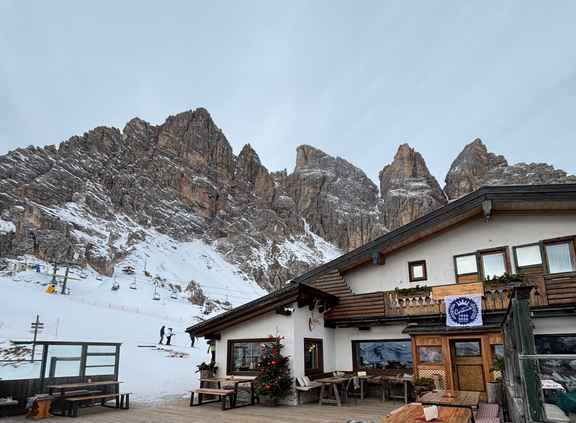
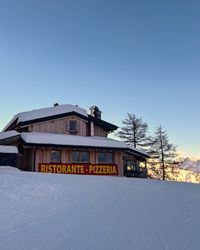
Sometimes when the weather is winning or when our legs are sore, it's time to warm up and take a break in a nearby cozy hut.
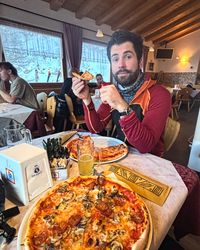
Early pizza dinner before driving back to Trento turned into a bit of a logistics pickle. Our car was parked 20 minutes uphill, the pizza oven was crackling and taking its sweet time, and the last chair to Padon was leaving at 16:30 sharp. David ended up eating at a leisurely pace of about 1 slice per second.
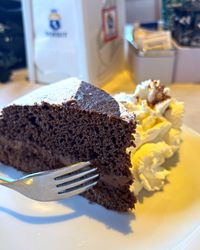
Pizza, beers, and some cake before returning to Trento
40.00 EUR
Lift Timing and Last-Chair Cutoffs
About two-thirds down the Bellunese you pass the Passo Fedaia parking lot; that’s also where the connecting red run #50—Padon—from Arabba joins.
After that come two more fun, steep sections with the cozy along the way before the run mellows out and turns blue. That’s the ski school area and where the Padon chairlift starts. That one takes you back to Arabba and runs until 16:30. The blue continues for another 2.5 km and ends back at the bottom of the Marmolada cable car system.
And that’s it. That’s all there is to ski on Marmolada.
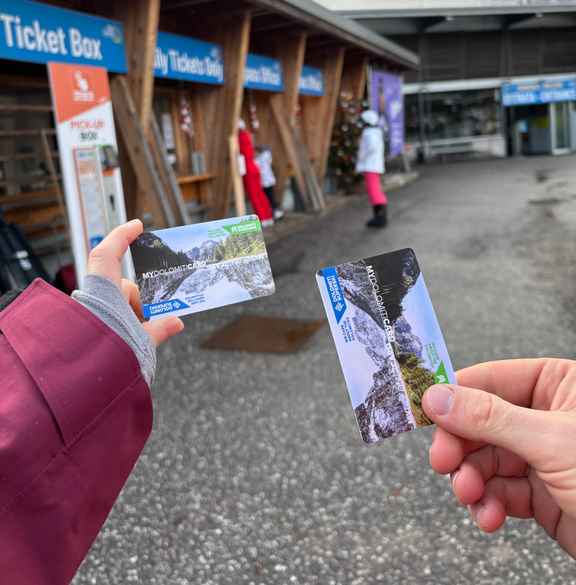
Ski Pass & Prices
Skiing Marmolada boils down to three cable cars back-to-back to the top and one 12 km run down. They’re all part of the Arabba-Marmolada ski area. Here are your ticket options with 25/26 season prices:
25/26 season
Last updated: 1.3.2026
- Points card400 up · 90 down
- One-way ticket31 EUR
- Round-trip ticket38 EUR
- Afternoon ticket43 EUR high season · 38 EUR low season
- Day ticket53 EUR high season · 48 EUR low season
- Arabba–Marmolada ski passIncluded
- Dolomiti Superski ski passIncluded
Summing Up – Is Marmolada Worth It?

We think so. Absolutely. The views, the elevation, the glacier, the endless Bellunese run. You won’t get that package anywhere else in the Dolomites.
But there’s a right and a not-so-right way to do it. Best approach: treat it as a day trip. Make your way to Marmolada, check out the top, lap a few runs, and move on.
Honestly, unless conditions are perfect and the slopes are empty, you only need two runs. First, the touristy one: take in the view at the top, then ski it bit by bit with your group. Second, the speed run: do the whole thing in one go and see if your legs can handle over 14 km of steep terrain without a break.
Our pick if you’re based in Val di Fassa: drive in early, park at Passo Fedaia, ski, then head to Arabba when everyone arrives at Marmolada and come back in the afternoon—maybe one last run top to bottom before ending at your car.
We wouldn’t stay right by Marmolada, especially for multiple days; you’ll mostly want to leave for other areas. If you do look for somewhere to stay in the area, here’s a map that can help:
Where to stay around Marmolada 
Frequently Asked Questions
 How high is Marmolada and where do you actually ski?
How high is Marmolada and where do you actually ski? How do you get to Marmolada and where should you park?
How do you get to Marmolada and where should you park? Can you ski to Marmolada from Arabba or the Sella Ronda?
Can you ski to Marmolada from Arabba or the Sella Ronda? How much does it cost to ski Marmolada and what ticket do I need?
How much does it cost to ski Marmolada and what ticket do I need? What is the Bellunese run and is it difficult?
What is the Bellunese run and is it difficult? What are the cable cars and stations like on Marmolada?
What are the cable cars and stations like on Marmolada? Is there food on the Bellunese and when does the last lift go?
Is there food on the Bellunese and when does the last lift go? Is Marmolada worth it and how should I plan the day?
Is Marmolada worth it and how should I plan the day?